


Common Pathologies
This is your Services Page. It's a great opportunity to provide information about the services you provide. Double click on the text box to start editing your content and make sure to add all the relevant details you want to share with site visitors.
Bunions (Hallux valgus)
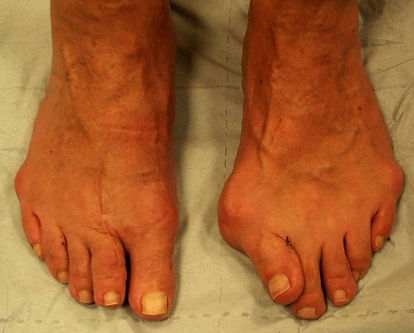
A bunion (hallux valgus) is the movement of the 1st metatarsal away from the 2nd with the big toe drifting towards the second toe. Most patients complain of pain, a prominent joint and the inability to wear shoes comfortable. Bunions are considered to be a progressive condition. The cause of bunion’s is unknown but possible factors include a family history, foot function and footwear.
Heel Pain

This is a Paragraph. Click on "Edit Text" or double click on the text box to edit the content and make sure to add any relevant information that you want to share with your visitors.
People are genuinely interested in learning more about you, so don’t be afraid to share personal anecdotes to create a more friendly quality.
Nail Surgery

An ingrown toenail occurs when the side or corner of a toenail grows into the surrounding skin, causing pain, redness, swelling, and sometimes infection. Commonly affecting the big toe, it is often caused by improper trimming, tight shoes, or foot injuries. Treatment includes warm, salty foot soaks and wearing comfortable shoes, with professional care required if infection occurs.
Diabetic Foot / Education

All forms of diabetes may lead to damage to the circulation and to the nerves. This is particularly common in the extremities of the body.
The foot is a vulnerable area because it is enclosed in a shoe and it can be difficult to see and check regularly. If some sensation is lost in the foot because of nerve damage, pain may not alert the person that damage has occurred. Problems such as broken areas of skin around the foot can easily arise, but these can be difficult to heal. Prevention is therefore very important and following the appropriate advice is vital.
Management: This will involve regular check-ups to ensure good foot health. Prompt treatment for any foot problems is also important. Prevention of possible long-term problems may also be appropriate, with the use of modified footwear, orthoses and surgery to correct deformity.
In cases where severe infection or lack of circulation are prevelant then salvage surgery might be required to re-estabilish the circulation or restrict the spread of infection by amputation.
Flat Feet / Gait Analysis

Flat Feet
This can be a concern for children and their parents, as well as adults. Usually, the concern is a lower than normal arch on the inside of the foot. This can be a normal finding and is very commonly observed in children requiring no more than reassurance. In a small number of cases, the foot can assume a position in which the joints, tendons and muscles are under an abnormal degree of stress, causing pain in the foot which can radiate into the leg.
Management:
The flat foot is often managed by supportive footwear with or without orthoses inside the shoe.
Exercises may also help. Surgery is reserved for those with very severe mal alignment perhaps due to congenital deformity or a torn tendon who do not respond to conservative care. In these cases the alignment and stability of the foot is restored with a combination of bone and soft tissue techniques.
Pain in the foot and ankle

Pain can be general and difficult to place, or it may be at a particular site or during a certain movement. Possible reasons may include: arthritic change, a response to injury or trauma, nerve entrapment, a systemic cause e.g rheumatoid arthritis or diabetes, soft tissue inflammation or an unstable foot and/or ankle perhaps due to an underlying biomechanical problem. Management: The effective management of your symptoms requires an accurate diagnosis, the treatment options can then be explained to you and a treatment plan agreed.